Markets
Online sales reach 10% of Orkla India revenue as spice brands chase speed
E-commerce took about 7% of India's FMCG sales in April to June 2026 and 21% in the top eight metros. Spice brands are selling more via quick commerce.
Published · Data as of · 4 min read
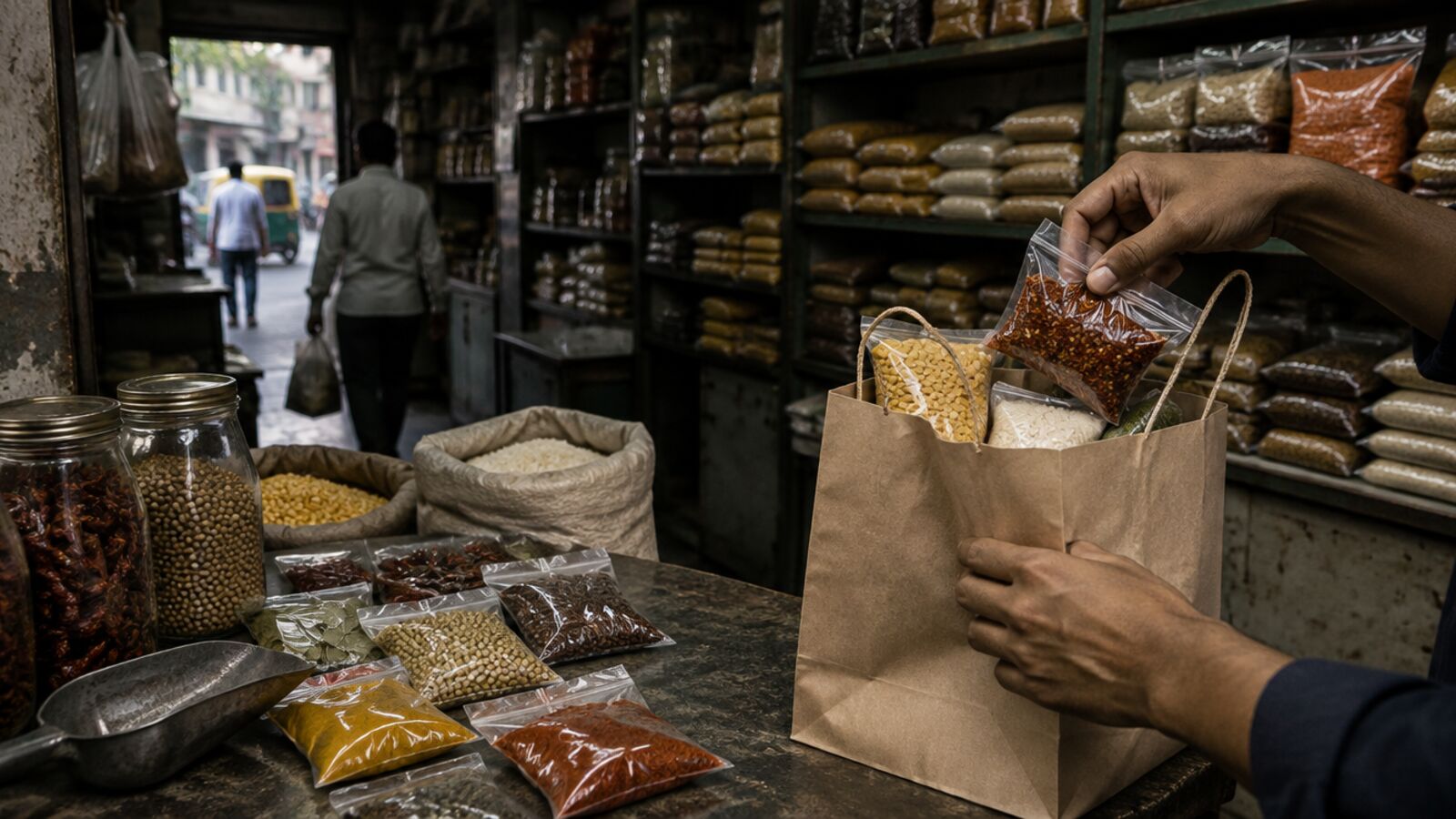
Digital channels made up 10.0% of Orkla India's domestic revenue in July to September 2026, up from 8.9% a quarter earlier, as the owner of MTR and Eastern spices sold more through quick commerce apps [1][2]. Across all packaged goods, e-commerce including quick commerce reached about 7% of India's FMCG sales nationally in April to June 2026, NielsenIQ (NIQ) said in its first all-India measure of the channel [3].
The shift matters to the spice trade because online shelves favour branded blends over loose seed, change pack sizes and give urban shoppers a way to buy premium single-origin jeera (cumin), dhania (coriander) and chilli. It also leaves a gap in market data, since traditional retail panels do not fully capture the fastest-growing channel.
Online share is highest in large cities
NIQ's April to June 2026 snapshot put e-commerce at 21% of FMCG sales in the top eight metros and 25% in southern metros, the Daily Pioneer reported [4]. E-commerce volumes grew 34.8% in the quarter, against 17.5% for modern trade, while rural FMCG volumes fell 5% [4]. Metros accounted for 68% of e-commerce sales [4].
Food, which makes up 64% of FMCG sales in NIQ's data, grew 0.9% in value with volumes down 1.1% in the quarter [4]. Online growth is therefore taking share in a flat overall food market rather than riding a broad boom.
| Measure | Figure | Period | Source |
|---|---|---|---|
| E-commerce share of FMCG sales, all India | about 7% | Apr to Jun 2026 | [3] |
| E-commerce share, top eight metros | 21% | Apr to Jun 2026 | [4] |
| Orkla India digital share of domestic revenue | 10.0% | Jul to Sep 2026 | [1] |
| Tata Consumer e-commerce and quick commerce, share of India business | 19% | 2025-26 | [6] |
| Blinkit active dark stores | 2,243 | March 2026 | [5] |
Quick commerce now drives most online grocery sales
For large food companies, ten-minute delivery apps have overtaken marketplaces. Dabur said quick commerce supplied 75% of its online sales in the March 2026 quarter, up from 50% the quarter before. Britannia and Tata Consumer each drew more than 70% of online sales from the channel, Angel One reported [7]. Parle Products and AWL Agri Business put the figure at 65% for 2025-26 [7].
The store base is large. Blinkit had 2,243 active dark stores in March 2026, with Zepto at 1,139 and Instamart at 1,143, according to Inc42 [5].
Spice brands report faster growth online
Orkla India's digital commerce grew 38.1% in April to June 2026, managing director Sanjay Sharma told analysts [2]. Chief financial officer Suniana Calapa said the online mix was about 60:40 convenience foods to spices, with blended spices outselling pure spices [2]. In July to September digital sales grew 23.0% overall and 33.6% outside South India [1].
Tata Consumer said its e-commerce and quick commerce business grew 62% in 2025-26 and contributed 19% of India revenue [6]. Chief executive Sunil D'Souza said the consumer shift to these channels had helped Tata Sampann because shelf availability was no longer a constraint [6]. Tata Sampann revenue grew 57% in July to September 2026, with growth across pulses and spices, the company said [8].
Smaller and regional brands use the channel to reach new towns. DS Group said quick commerce and modern trade were driving its Catch brand's growth in smaller Uttar Pradesh cities [9]. Spice and premix brand ZOFF Foods gets about 90% of its sales from e-commerce and quick commerce, afaqs reported in October 2025 [10].
The data gap and what to watch
Market share figures are getting harder to read. D'Souza told analysts in May 2026 that Nielsen does not capture quick commerce and e-commerce, which he said were 21% of Tata Consumer's portfolio. He said the company would stop publishing market share data [6].
Three markers matter for spice suppliers. The first is whether NIQ's national e-commerce share keeps rising from about 7% [3]. The second is whether blended masalas keep outselling pure spices online, which favours ground and blended products over whole seed [2]. The third is festive-quarter results from listed spice sellers in early 2027.
Questions and answers
How much of India's FMCG sales happen online?
About 7% nationally in April to June 2026, according to NielsenIQ, which included quick commerce in the measure. The share was 21% in the top eight metros and 25% in southern metros.
Do spice brands sell much through quick commerce?
A growing share. Orkla India, owner of MTR and Eastern, got 10.0% of domestic revenue from digital commerce in July to September 2026. Tata Consumer said e-commerce and quick commerce were 19% of its India business in 2025-26.
Which spice products sell best online?
Blended spices lead. Orkla India's chief financial officer said in August 2026 that blended spices outsell pure spices online and that the company's online mix is about 60:40 convenience foods to spices.
Sources
- Equitybulls (Orkla India results release). Orkla India delivers broad based Q2 growth; revenue rises 19.4% and PAT grows 19.2%, 2026-11-04.
- Orkla India Limited. Transcript of Q1 FY27 earnings conference call, 2026-08-04.
- NielsenIQ. India FMCG Quarterly Snapshot, Q2 2026, Q2 2026.
- The Pioneer (citing NielsenIQ). FMCG growth moderates in June quarter: NielsenIQ, 2026-09-28.
- Inc42. Inside the dark store festive stock-up strategy, 2026-08-11.
- Tata Consumer Products Limited. Earnings conference call transcript, Q4 and full year 2025-26, 2026-05-08.
- Angel One. Quick commerce drives up to 75% of online sales for leading FMCG companies, 2026-05-27.
- Tata Consumer Products Limited. Results for the quarter ended 30th September 2026, 2026-10-26.
- DS Group. DS Group's Catch Salt and Spices strengthens market presence in UP with new products, 2025-11-06.
- afaqs. India's festive buying goes instant: the rise of q-commerce over kiranas, 2025-10-29.
Analysis by the India Spices Market editorial desk. For information only, not trading or investment advice.
Related
More from Intelligence.

Markets
Gulf buys over a quarter of India's spice exports as Saudi demand climbs
26 November 2026 · 4 min read

Markets
Bangladesh becomes top buyer of Indian jeera as China cuts purchases
26 November 2026 · 4 min read

Markets
US becomes top Indian spice market even as its purchases fall 12%
26 November 2026 · 4 min read
Read the market here. Meet it in Gandhinagar.
Every topic on this page is on the programme on 24 April 2027, with the people who move these prices in the room.
Registration opens 1 December 2026