Markets
Bangladesh becomes top buyer of Indian jeera as China cuts purchases
Bangladesh took 29,579 tonnes of Indian cumin in 2025-26, about 15% of exports, as China's purchases fell 76%. Eid buying and informal trade shape demand.
Published · Data as of · 4 min read
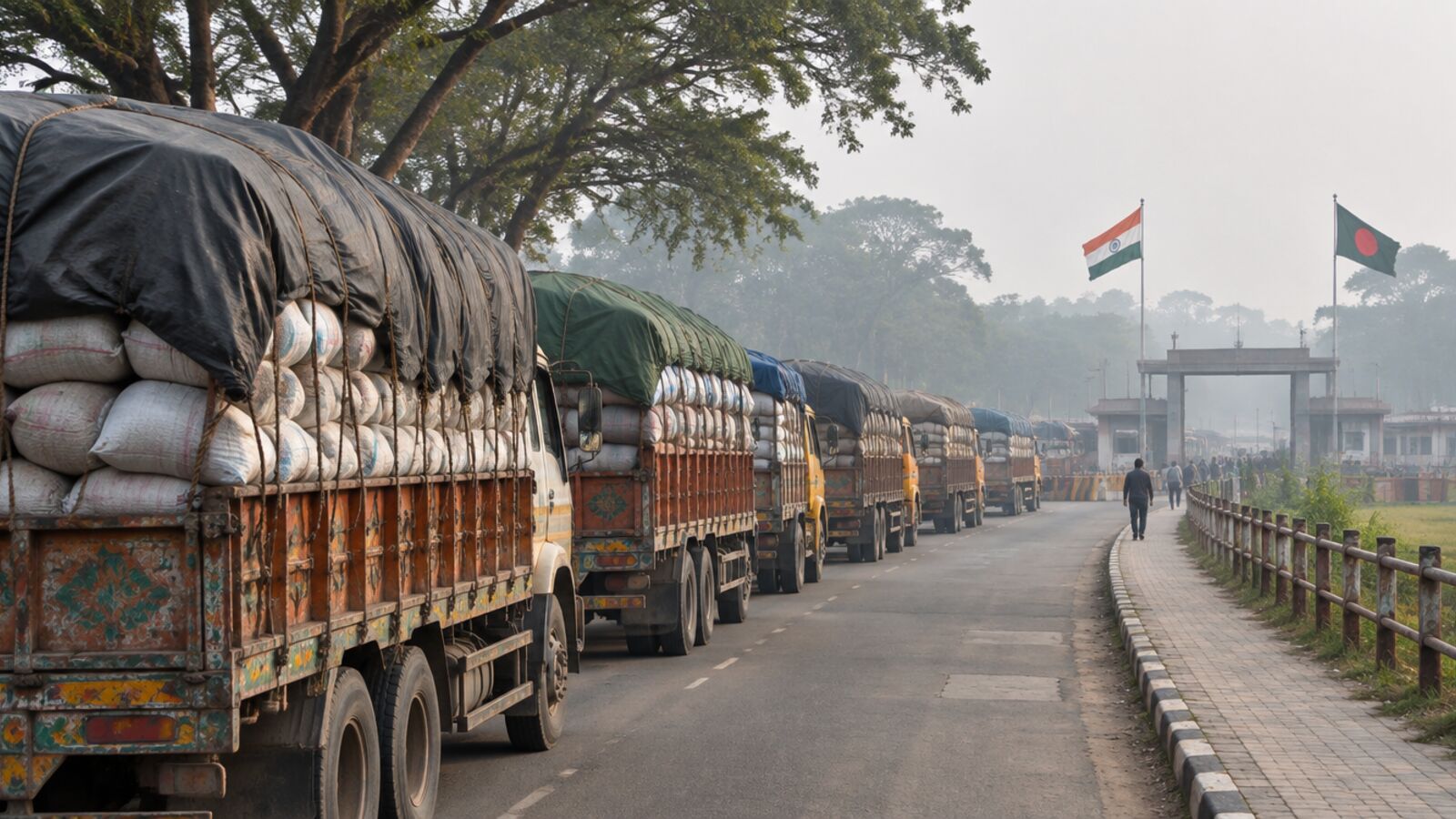
Bangladesh was the largest buyer of Indian jeera (cumin) in 2025-26, taking 29,579 tonnes against 30,515 tonnes a year earlier, according to trade figures reported by Commodity Board [1]. That was about 15% of India's 196,800 tonnes of cumin exports in the April to March year (calculated) [1][2]. Bangladesh moved to the top because China, the leader in 2024-25, cut its purchases from 38,721 tonnes to 9,271 tonnes [1].
The shift matters to exporters in Unjha and across Gujarat because Bangladesh buys close to home and on a calendar tied to festivals. Its volume fell about 3% in 2025-26 (calculated) while India's total cumin exports fell 14.39% [1][2]. It was one of the few large outlets that held up in a weak year.
Bangladesh held its volume while China fell away
Commodity Board's destination table, which does not name its data source, ranks Bangladesh ahead of the United States, China and Turkey in 2025-26 [1]. In 2024-25 China had been ahead of Bangladesh by about 8,200 tonnes (calculated) [1].
| Market | 2024-25 (t) | 2025-26 (t) | Change |
|---|---|---|---|
| Bangladesh | 30,515 | 29,579 | -3.1% |
| United States | 17,384 | 15,458 | -11.1% |
| China | 38,721 | 9,271 | -76.1% |
| Turkey | 967 | 7,529 | +678.6% |
| All destinations | 229,881 | 196,800 | -14.4% |
Country rows: Commodity Board [1]. Totals: Spices Board India data cited in the ICAR paper [2]. Changes are calculated.
A paper by Meena and co-authors in the International Journal of Seed Spices lists weak export demand from China and Bangladesh among the reasons for lower domestic cumin prices [2]. Bangladesh took more of India's other seed spices, though. Fennel shipments to Bangladesh rose 14.26% in quantity and fenugreek shipments rose 28.63% in 2025-26, according to Spices Board India data cited in the paper [2].
Eid demand sets the buying calendar
Bangladeshi orders arrived when Unjha needed them. On 27 April 2026 Commodity Board reported that Bangladesh importers had booked about 15 containers at Unjha, the first notable external demand in several weeks [3]. Dubai, a redistribution hub, had largely stopped buying amid military action against Iran and disruption around the Strait of Hormuz, the same report said [3]. Indian 98% seed was offered at about EUR 2.03/kg FOB Unjha at the time [3].
By 11 June 2026 the publication described Bangladesh buying, backed by festive and meat-season demand ahead of Eid-ul-Azha, as the main change in the Indian market that month [4]. Conventional Indian seed was offered at EUR 2.10 to 2.25/kg FCA New Delhi and Unjha [4]. The report flagged a post-Eid slowdown in Bangladeshi demand as a risk [4].
Prices inside Bangladesh rose into the festival. BigMint reported cumin at BDT 700 to 800 per kg in Khulna and Paikgachha markets on 26 May 2026 [5]. Indian traders told BigMint that stronger Bangladeshi demand could support trade and prices in India [5].
Customs data capture only part of the flow
Bangladesh's own import records tell a smaller story. Bangladesh Sangbad Sangstha (BSS) reported on 20 May 2026 that Chattogram Custom House recorded 2,793 tonnes of cumin imports in FY2025-26 and that imports of four major spices, cumin included, were about 25% below the previous fiscal year [6]. A plant quarantine official at Chattogram port told BSS that cumin also enters through land ports outside Chattogram [6].
Traders quoted by BSS said large volumes come in illegally through border areas in Sylhet, Cumilla and Feni [6]. Hot spice trader Md. Badsha put the legal import cost, including duties, at about Tk 530 per kg, with some Chattogram wholesalers selling at Tk 500 [6]. Amar Kanti Das of the Bangladesh Wholesale Hot Spices Traders Association said the government loses Tk 220 to Tk 250 per kg in duty on smuggled cumin [6].
Neither BSS nor the traders it quoted put a number on the informal trade. For Indian exporters the practical point is that duty-paid importers in Bangladesh compete with cheaper informal supply, which can cap what they will pay for recorded shipments.
Indian offers are firmer than at Eid
Indian prices have risen since the spring buying round. Cumin seed 98% was offered at EUR 2.28/kg FOB Unjha on 21 November 2026, against EUR 2.25/kg in the previous update, Commodity Board data show [7]. That is about 12% above the late-April offer (calculated) [3][7].
The wider export trend is still weak. Shipments from April to July 2026 were about 53,462 tonnes, around 27% lower on the year, Commodity Board reported on 13 October, citing ncdexlive.org [8]. No 2026-27 destination split for Bangladesh was found on any page opened for this article.
What the trade is watching
Three markers will show whether Bangladesh keeps its place in 2026-27. The first is the size and timing of pre-festival orders at Unjha, which in 2026 came in late April and June [3][4]. The second is whether Bangladeshi buyers accept higher Indian offers after prices rose through the autumn [7]. The third is China: a return to its 2024-25 volume of 38,721 tonnes would put it back above Bangladesh [1].
Questions and answers
Which country buys the most Indian cumin?
Bangladesh was the largest buyer of Indian jeera (cumin) by volume in 2025-26, with 29,579 tonnes, according to trade figures reported by Commodity Board. The United States was second at 15,458 tonnes. China, the leader a year earlier, fell to 9,271 tonnes.
When does Bangladesh buy Indian jeera?
Bangladeshi buying tends to pick up before Eid, when spice use in Bangladesh rises. In 2026, importers booked about 15 containers at Unjha in late April and trade reports in June linked firmer Indian prices to Eid-ul-Azha demand.
Does all Indian cumin reach Bangladesh through official channels?
Bangladeshi traders say it does not. Traders quoted by BSS in May 2026 said large volumes enter illegally through border areas. An industry association official put the duty loss at Tk 220 to Tk 250 per kg.
Sources
- Commodity Board (CMB News). Cumin trade under pressure as India faces export slump and shifting demand, 2026-08-03.
- Meena et al., International Journal of Seed Spices 16(1) (ICAR). India's Seed Spice Exports amid Geopolitical Disruptions, Accepted 2026-10-01.
- Commodity Board (CMB News). Cumin market nears a turning point as Bangladesh steps in, 2026-04-27.
- Commodity Board (CMB News). Bangladesh buying lifts jeera: cumin market finds a floor in June, 2026-06-11.
- BigMint. Bangladesh: Eid-ul-Azha demand pushes spice prices higher, 2026-05-26.
- Bangladesh Sangbad Sangstha (BSS). Spice prices fall in Chaktai-Khatunganj amid oversupply, 2026-05-20.
- Commodity Board (CMB News). Cumin under pressure: Indian selling weighs on prices as rabi sowing looms, 2026-11-26.
- Commodity Board (CMB News). Cumin market firms as Indian jeera rallies on tight high-grade supply, 2026-10-13.
Analysis by the India Spices Market editorial desk. For information only, not trading or investment advice.
Related
More from Intelligence.

Markets
Gulf buys over a quarter of India's spice exports as Saudi demand climbs
26 November 2026 · 4 min read

Markets
US becomes top Indian spice market even as its purchases fall 12%
26 November 2026 · 4 min read

Markets
China cuts Indian spice buying 32% and turns rival in chilli and cumin
26 November 2026 · 4 min read
Read the market here. Meet it in Gandhinagar.
Every topic on this page is on the programme on 24 April 2027, with the people who move these prices in the room.
Registration opens 1 December 2026