Supply chain
Hormuz shock lifted Gulf freight to US$7,000 a box for spice exporters
Kochi to Jebel Ali freight rose from about US$1,000 to nearly US$7,000 per box in 2026. The Gulf takes a fifth of India's seed spice exports.
Published · Data as of · 4 min read
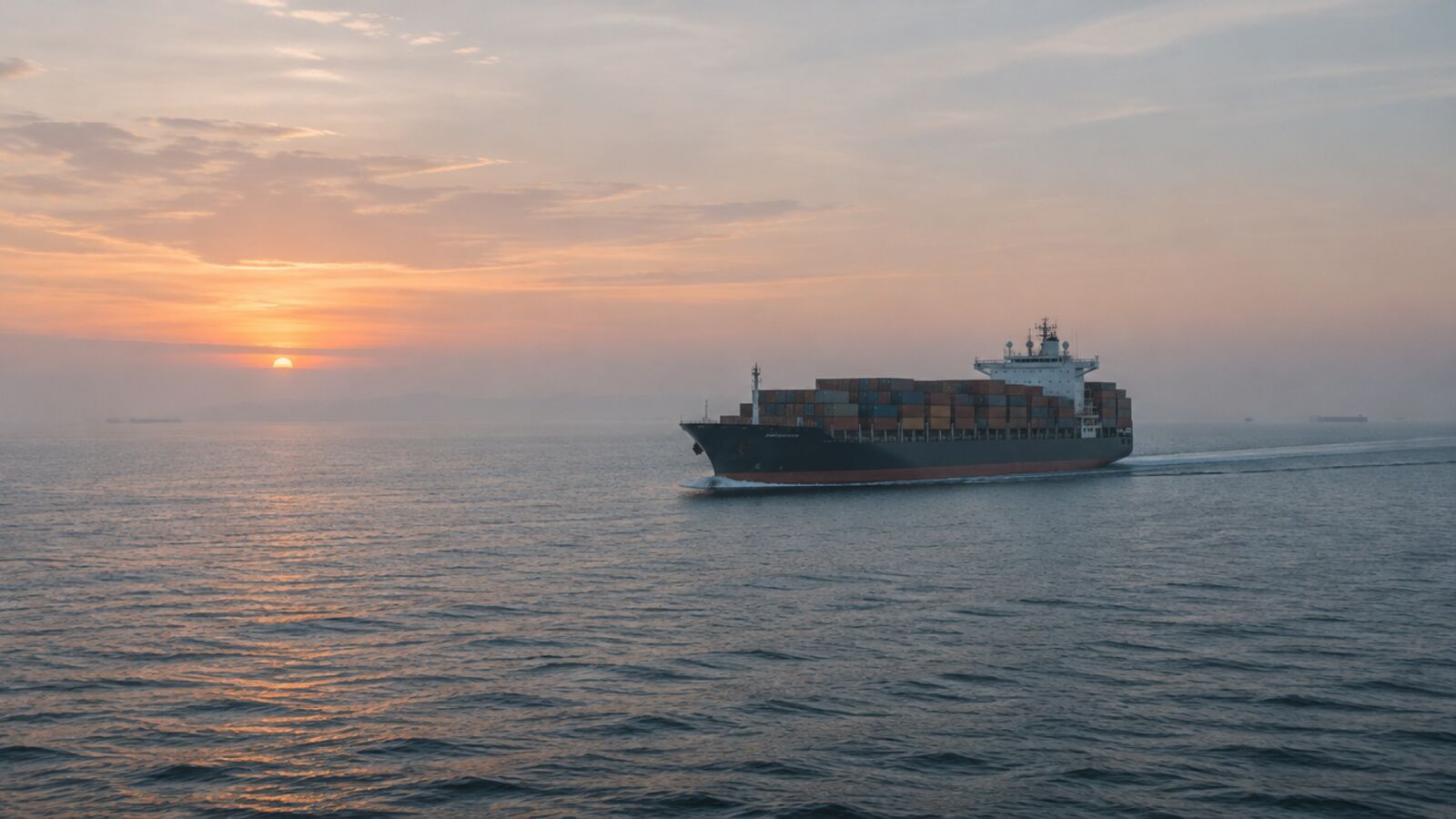
Container freight from Kochi to Jebel Ali rose from US$1,000 to 1,500 to nearly US$7,000 per box after the Strait of Hormuz was closed in 2026, India Sea Trade News reported in July [1]. Shipping lines also added war-related surcharges of an estimated US$4,000 per container on Gujarat cumin shipments, the Times of India reported in March, according to a paper in the International Journal of Seed Spices [2].
The cost matters because the Gulf is the largest regional outlet for Indian seed spices. Gulf countries took 20.36% of India's seed spice export volume and 21.03% of its value in 2025-26, up from 12.90% and 13.51% in 2021-22, the ICAR paper found from Spices Board data [2]. The UAE's hubs also re-export Indian spices to Europe, North Africa and North America [2].
The shock came in March
The disruption began on 28 February, when cargo movement through the Strait and Jebel Ali was hit, FreshPlaza reported [3]. Spot rates from Shanghai to Jebel Ali rose from about US$1,800 per container in January 2026 to over US$7,000 by late March, Freightos data cited by Indian Transport and Logistics News show [4]. War-risk premiums for Hormuz transits rose sharply and carriers added fuel surcharges of about US$200 to 500 per container on several routes [4].
| Route or measure | Before | During disruption | Source |
|---|---|---|---|
| Kochi to Jebel Ali, per container | US$1,000 to 1,500 | nearly US$7,000 (Jul 2026) | [1] |
| Shanghai to Jebel Ali, per container | about US$1,800 (Jan 2026) | over US$7,000 (late Mar 2026) | [4] |
| War surcharge on Gujarat cumin | none | about US$4,000 per container | [2] |
| Drewry WCI composite, 40ft | about 126% lower a year earlier | US$4,176 (19 Nov 2026) | [5] |
Dubai Customs routed Jebel Ali-bound cargo through Khorfakkan and Fujairah in March, with containers trucked onward [3]. Equipment was stranded too. One customs broker told India Sea Trade News that a customer paid nearly US$50,000 to secure an empty container for Iraq after booking one at US$1,500 [1].
Exporters moved risk to buyers
By 20 April, spice exporters across several categories were quoting FOB but declining to commit on CNF or CIF terms, leaving buyers to carry freight risk, Vesper reported [6]. Iran, historically one of the largest buyers of Indian pepper, had been effectively absent since the conflict began [6].
The ICAR paper links the 2026 slump in cumin demand partly to the conflict. It cites the Federation of Indian Spice Stakeholders, via the Times of India, as saying Gujarat's cumin exports fell 12.5% in 2025 to 2.07 lakh tonnes, with shipment cancellations and freight surcharges in February and March 2026 adding pressure [2]. Coriander held up better: exports to the GCC fell 2.09% in quantity but rose 1.82% in value in 2025-26 [2].
Port choice changed as well. P. Subramaniam told India Sea Trade News that freight from Nhava Sheva is nearly 50% lower than from southern ports [1]. He said over 40% of cargo that used to move through Thoothukudi and Kochi now goes via Nhava Sheva [1].
Rates are easing but stay high
Global box rates have come off their peaks but remain far above 2025. Drewry's World Container Index fell 3% to US$4,176 per 40ft container on 19 November 2026, its fourth weekly decline, ShipUniverse reported [5]. That was still 126% above a year earlier [5]. Shanghai to Rotterdam was about US$3,496 [5].
Forecasters expect more relief. Xeneta projects average spot rates could fall by as much as 30% in 2027 as capacity grows about 6.8% and ships return to the Red Sea and Suez route, Seatrade Maritime reported on 5 November [7]. Chief analyst Peter Sand warned that supply shocks can easily overpower those fundamentals [7].
What exporters are watching
The first marker is the status of the Strait of Hormuz and war-risk cover for Gulf calls. The second is whether exporters return to CNF quotes for Gulf and European buyers, which would signal confidence in freight costs [6]. The third is the pace of Suez returns, which Xeneta sees as the main driver of lower rates in 2027 [7]. No published freight index for Mundra or Nhava Sheva to Jebel Ali in November 2026 was found on any page opened for this article.
Questions and answers
How did the 2026 Hormuz crisis affect Indian spice exports?
Freight to the Gulf rose several-fold and carriers added war surcharges, with one estimate of US$4,000 per container on Gujarat cumin. Exporters switched to FOB quotes and some shipments were cancelled in February and March 2026.
How important is the Gulf for Indian seed spices?
Gulf countries took 20.36% of India's seed spice export volume and 21.03% of its value in 2025-26, according to an ICAR paper using Spices Board data. UAE hubs also re-export Indian spices to other regions.
Are container freight rates falling?
Drewry's World Container Index fell for a fourth week to US$4,176 per 40ft container on 19 November 2026 but was still 126% above a year earlier. Xeneta forecasts spot rates could fall up to 30% in 2027.
Sources
- India Sea Trade News. India's exporters face freight crisis as West Asia conflict disrupts shipping; calls grow for domestic capacity, 2026-07-13.
- Meena et al., International Journal of Seed Spices 16(1) (ICAR). India's Seed Spice Exports amid Geopolitical Disruptions, Accepted 2026-10-01.
- FreshPlaza. Gulf trade outlook improves for Indian produce exporters, 2026-06-16.
- Indian Transport and Logistics News. Shipping through the Gulf gets costlier as risks climb, 2026-04-02.
- ShipUniverse (citing Drewry World Container Index). Drewry WCI, 19 November 2026, 2026-11-19.
- Vesper. Gulf shipping disruption reshapes Indian spice export flows, 2026-04-23.
- Seatrade Maritime. Container rates to plummet in 2027, 2026-11-05.
Analysis by the India Spices Market editorial desk. For information only, not trading or investment advice.
Related
More from Intelligence.

Supply chain
El Nino and dry soils slow rabi sowing in India's jeera and dhania belt
26 November 2026 · 4 min read

Supply chain
Monsoon 2026 ends 13% short, leaving dry soils for jeera and dhania sowing
26 November 2026 · 4 min read

Supply chain
Steam sterilisation and colour sorting become musts for spice exporters
26 November 2026 · 4 min read
Read the market here. Meet it in Gandhinagar.
Every topic on this page is on the programme on 24 April 2027, with the people who move these prices in the room.
Registration opens 1 December 2026