Policy
Turkish cumin faces 50% EU alkaloid checks while Indian seed stays off list
EU caps pyrrolizidine alkaloids in cumin at 400 micrograms per kg. Turkish seed faces strict checks; Indian jeera does not, but the limit covers both.
Published · Data as of · 4 min read
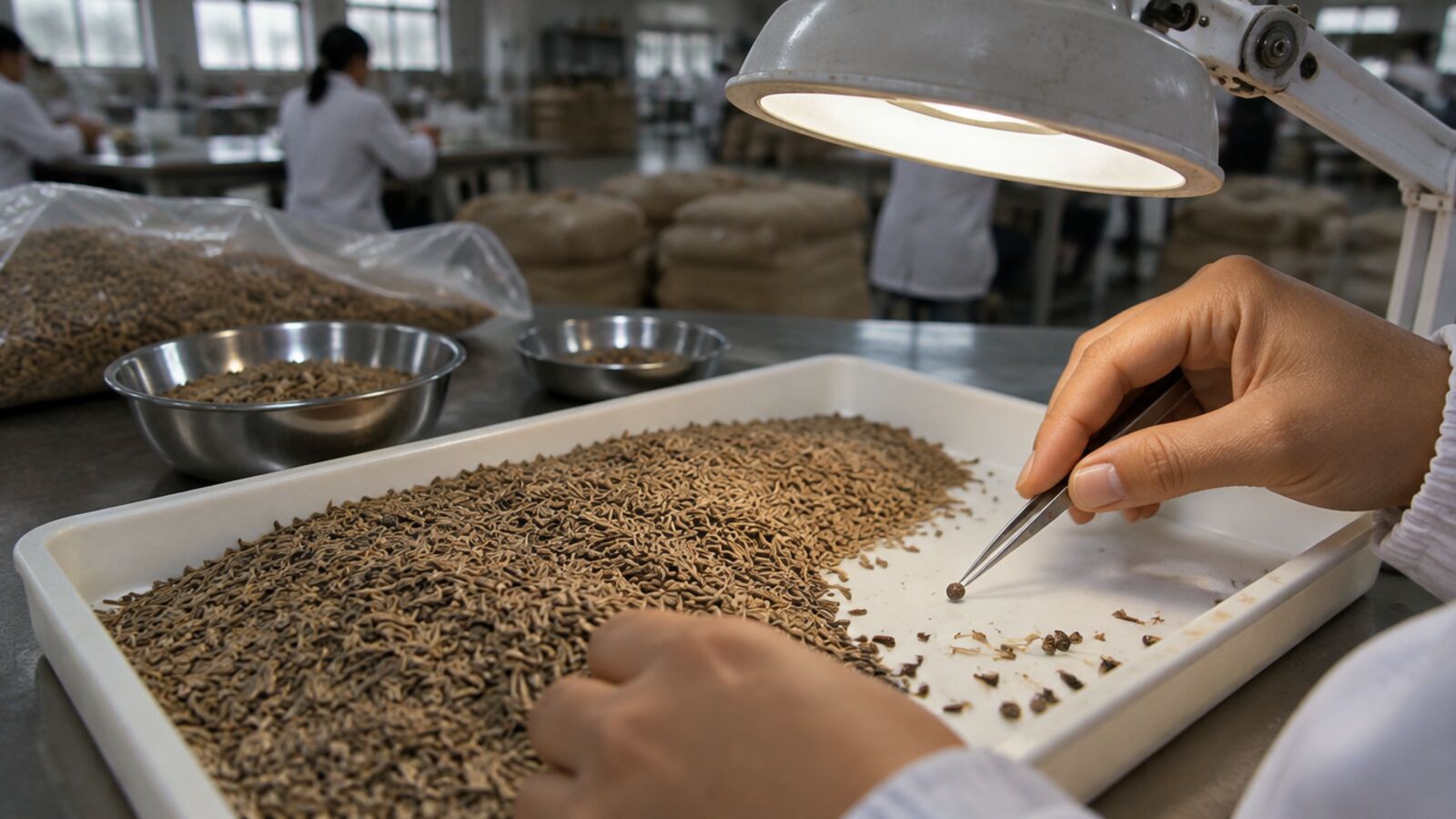
Cumin from Türkiye must be checked for pyrrolizidine alkaloids at 50% of consignments entering the European Union and carry an official certificate, while jeera (cumin) from India faces no increased controls for these plant toxins, according to the EU's high-risk list as amended in June 2026 [1]. The EU limit of 400 micrograms per kg nonetheless applies to cumin from every origin [2].
The split matters for Indian exporters competing with Turkish seed in Europe. Turkish suppliers carry extra testing and certification costs on every shipment, while Indian jeera carries a separate and growing burden for pesticide residues [1]. A contamination problem in Indian cumin could add a second set of controls.
The EU limit and how it is measured
Commission Regulation (EU) 2020/2040 of 11 December 2020 set a maximum level of 400 micrograms per kg for pyrrolizidine alkaloids in cumin seeds, the same as for most dried herbs [2][3]. The limit refers to the lower-bound sum of 21 named alkaloids. A further 14 alkaloids that co-elute with them in common methods must also be counted [2].
The limits have applied since July 2022 and are now part of the EU contaminants regulation, Regulation (EU) 2023/915, testing laboratory Eurofins notes [4]. Dried oregano and a few other herbs have a higher limit of 1,000 micrograms per kg [3].
Why Türkiye is under the strict regime
The alkaloids are not applied to the crop. They come from weeds harvested with it. A 2022 study in Food Chemistry: Molecular Sciences by Willocx and colleagues traced the alkaloids in contaminated cumin and anise to seeds of Heliotropium plants and found that as few as two such seeds in a jar could make a sample non-compliant [5]. Two earlier studies had found that at least a third of cumin and green anise samples tested exceeded the EU limit [5].
The Netherlands' CBI export promotion agency says plant toxin problems in spices rose because of oregano from Türkiye and cumin from Türkiye and India [3]. Turkish cumin moved to the stricter regime with 30% checks in January 2025. The frequency rose to 50% in August 2025 [3]. Regulation 2026/1206 kept Turkish cumin at 50% in Annex II, which requires an official certificate. Turkish dried oregano stays at 30% in Annex I [1].
| EU plant toxin controls | Origin | Checks |
|---|---|---|
| Cumin seeds, whole and ground | Türkiye | 50%, certificate required |
| Dried oregano | Türkiye | 30% |
| Cumin seeds | India | None for alkaloids (50% for pesticide residues) |
Source: Regulation (EU) 2026/1206 [1].
Notifications are falling
CBI counts show pyrrolizidine alkaloid issues in spices and herbs reported through the EU's alert system rose from 27 in 2022 to 47 in 2023 and 54 in 2024, then fell to 44 in 2025, which it attributes to improvement in Turkish cumin [3].
The monthly RASFF summaries compiled by AGRINFO show a small number of alkaloid notifications on herbs and spices in late 2026: one from Pakistan in August and two from Türkiye in September [6][7]. Neither month's summary lists an alkaloid notification for India [6][7].
What Indian exporters can do
Indian cumin is grown in the same kind of arid rabi fields in Gujarat and Rajasthan where weeds can be harvested with the crop, so the risk is not unique to Türkiye. Field weeding before harvest, seed cleaning and gravity separation at processing units and pre-shipment testing against the 400 microgram limit are the main safeguards, in line with the weed control focus of the Willocx study [5].
Standards are also being revised. Codex is reviewing its Code of Practice for weed control to prevent and reduce pyrrolizidine alkaloid contamination in food and feed (CXC 74-2014), in an electronic working group chaired by Türkiye with the UK and the Netherlands, which was due to submit a working paper by 31 July 2026 [8].
For Indian jeera, about 196,800 tonnes of which was exported in 2025-26 [9], staying off the alkaloid list is worth protecting. The EU reviews its lists at least every six months [1]. A run of notifications could change that quickly.
Questions and answers
What is the EU limit for pyrrolizidine alkaloids in cumin?
The EU maximum level for pyrrolizidine alkaloids in cumin seeds is 400 micrograms per kg, set by Regulation (EU) 2020/2040 and applied since July 2022. It is measured as the sum of 21 named alkaloids plus 14 that co-elute with them.
Is Indian cumin under EU controls for pyrrolizidine alkaloids?
No. Under Regulation (EU) 2026/1206 only cumin from Türkiye is on the EU's increased-control list for pyrrolizidine alkaloids, at 50% of consignments. Indian cumin is checked at 50% for pesticide residues instead.
Where do pyrrolizidine alkaloids in cumin come from?
They come from weeds such as Heliotropium that are harvested along with the cumin crop. A 2022 study found that as few as two Heliotropium seeds in a jar could push a sample over the EU limit.
Sources
- European Commission (copy hosted by the Icelandic Food and Veterinary Authority). Commission Implementing Regulation (EU) 2026/1206 of 9 June 2026 amending Implementing Regulation (EU) 2019/1793, 2026-06-09.
- legislation.gov.uk (EU text as adopted). Commission Regulation (EU) 2020/2040 amending Regulation (EC) No 1881/2006 as regards maximum levels of pyrrolizidine alkaloids in certain foodstuffs, Annex, 2020-12-11.
- CBI, Netherlands Ministry of Foreign Affairs. What requirements must herbs and spices meet to be allowed on the European market?, 2026-05-12.
- Eurofins. Maximum levels pyrrolizidine alkaloids, 2023-05-03.
- Willocx et al., Food Chemistry: Molecular Sciences 4: 100070. Sorting out the plants responsible for a contamination with pyrrolizidine alkaloids in spice seeds by means of LC-MS/MS and DNA barcoding, 2022.
- AGRINFO (COLEAD). RASFF notifications in August 2026, 2026-10-01.
- AGRINFO (COLEAD). RASFF notifications in September 2026, 2026.
- Codex Alimentarius (FAO/WHO). EWG invitation: revision of the Code of practice for weed control to prevent and reduce pyrrolizidine alkaloid contamination in food and feed (CXC 74-2014), 2025.
- Spices Board India. Item-wise export of spices from India, 2021-22 to 2025-26 (source: DGCI&S, Calcutta / MoC), 2026.
Analysis by the India Spices Market editorial desk. For information only, not trading or investment advice.
Related
More from Intelligence.

Policy
EU raises border checks on Indian cumin to 50% after pesticide failures
26 November 2026 · 4 min read

Policy
UK requires official certificates for Indian seed spices from January 2026
26 November 2026 · 4 min read

Policy
EU drops ethylene oxide certificate for Indian chilli and pepper in 2026
26 November 2026 · 4 min read
Read the market here. Meet it in Gandhinagar.
Every topic on this page is on the programme on 24 April 2027, with the people who move these prices in the room.
Registration opens 1 December 2026