Policy
FSSAI targets spice factories as new contaminant rules start 1 December
India's food regulator has moved spice checks to the factory gate. Its revised contaminant rules, with a safrole limit for nutmeg foods, start 1 December.
Published · Data as of · 4 min read
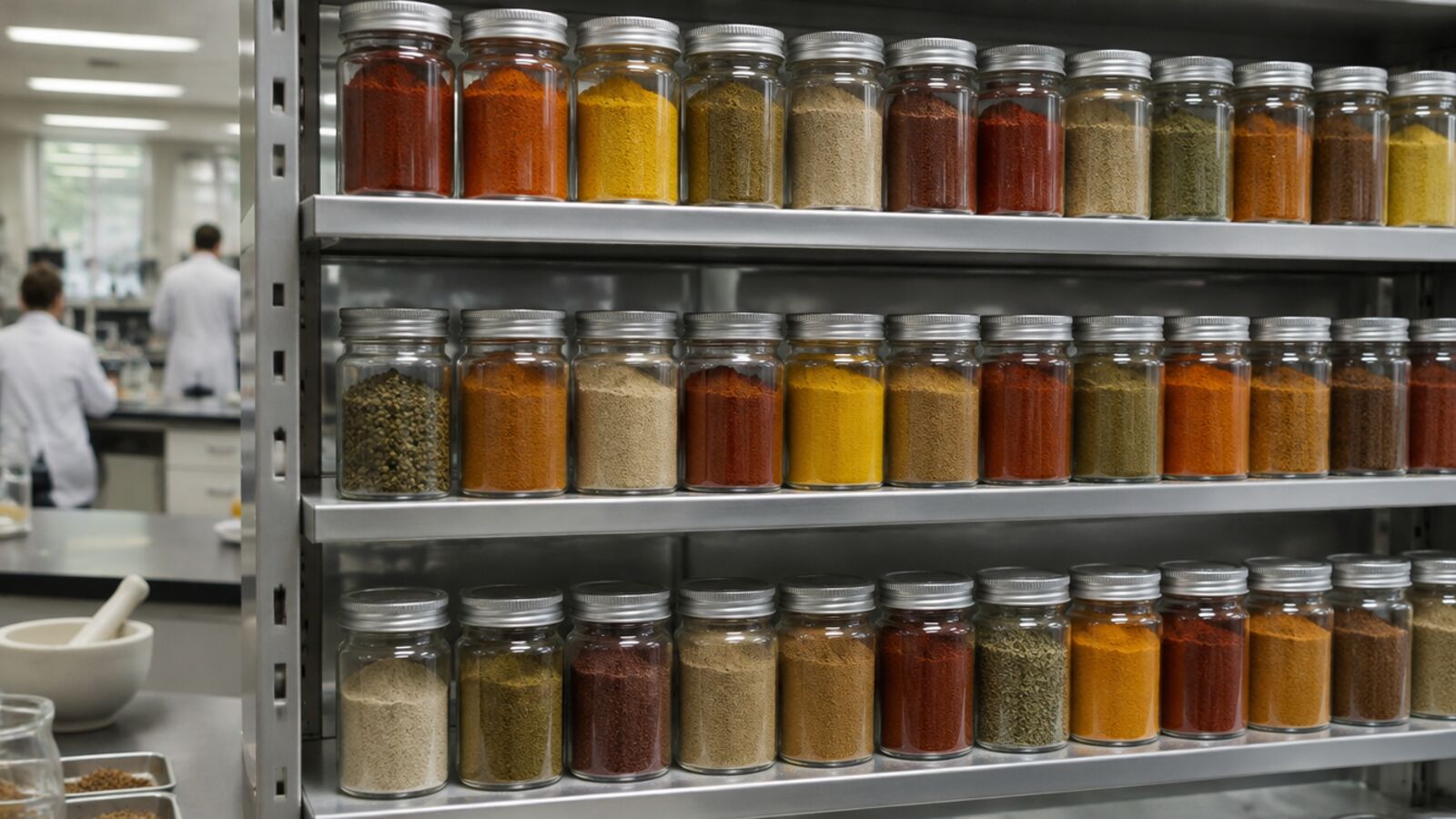
The Food Safety and Standards Authority of India's revised Contaminants, Toxins and Residues regulations take effect on 1 December 2026, including a new limit for safrole in foods containing mace or nutmeg, according to a report by the USDA Foreign Agricultural Service [1]. They follow a year in which FSSAI shifted spice enforcement to the factory gate after a national surveillance survey found problems in chilli, turmeric, coriander and other spices [3][4].
For processors of jeera (cumin) and dhania (coriander), the practical change is more inspection rather than new limits. FSSAI has not issued new pesticide residue limits for spices in the past year. The October 2026 draft on pesticide limits covers only tea [2].
What changes on 1 December
FSSAI notified the Food Safety and Standards (Contaminants, Toxins and Residues) Amendment Regulations 2026 on 14 May 2026 and posted them on its website on 25 May [1]. They revise limits for lead, arsenic, cadmium and aflatoxins in foods including pulses, edible oils and seafood. They also set limits for safrole and for oxolinic acid in seafood [1].
The spice-related entry replaces the safrole limit with one for beverages and foods containing mace and/or nutmeg kernel as an ingredient, at a level of 10 [5]. The aflatoxin changes apply to oils and oilseeds, not to spices [5]. The notification says no objections were received on the September 2024 draft [5].
A separate draft published in the Gazette on 16 October 2026 proposes pesticide limits for acetamiprid and imidacloprid in tea, with no entries for cumin, coriander, chilli or other spices [2].
| FSSAI action | Date | Spice relevance |
|---|---|---|
| Enforcement drive on 13 spice products | 1 to 31 October 2025 | Cumin, coriander, chilli, turmeric, pepper, cardamom, cinnamon |
| Contaminants amendment notified | 14 May 2026 | Safrole limit for mace and nutmeg foods |
| Contaminants amendment in force | 1 December 2026 | As above |
| Draft pesticide limits | 16 October 2026 | Tea only |
Sources: FSSAI, USDA FAS and TaxGuru [1][2][3][5].
Spice checks moved to the factory
FSSAI ran a pan-India surveillance of 13 spice commodities between November 2024 and February 2025 and reported non-compliance in quality parameters, contaminants, microbial counts and labelling, according to its letter of 17 September 2025 [3]. Law firm IndiaLaw said the survey drew more than 10,000 samples and found excess lead in chilli powder, illegal colours in turmeric, high moisture in coriander and misleading labels on pepper and cardamom [4].
The follow-up drive ran from 1 to 31 October 2025 and covered whole and powdered black pepper, cardamom, chilli, coriander, cumin and turmeric plus whole cinnamon [3]. Sampling was limited to manufacturing units so that compliance would be checked at source, with tests at NABL-accredited laboratories and state reports due by 20 November 2025 [3].
States are acting on their own
State regulators have stepped up as well. Maharashtra's Food and Drug Administration said it seized 11,963.87 quintals of spices and spice products worth Rs 19.70 crore between 1 April and 29 October 2026, after 1,057 inspections and 1,616 samples. It also suspended 84 food licences, PTI reported via ThePrint [6]. Of the samples analysed so far, 6 were found unsafe and 9 substandard, with 1,053 reports still awaited [6].
How domestic limits relate to export rules
India's pesticide limits for spices are set out in the same 2011 contaminants regulations. In 2024 the government said a default limit of 0.1 mg/kg applies to spices only for pesticides not registered in India, that 139 of more than 295 registered pesticides are approved for spices and that Codex limits for spices range from 0.1 to 80 mg/kg [7]. It also said FSSAI does not regulate the quality of exported spices, which falls to Spices Board India [7].
That split matters because export markets are tightening on residues even as domestic limits stay unchanged. The EU raised its checks on Indian cumin to 50% in June 2026 [8]. Processors that sell both at home and abroad will need factory testing that meets the stricter of the two regimes. The results of FSSAI's October 2025 drive, which have not been published, will show where domestic enforcement goes next.
Questions and answers
What new FSSAI rules apply to spices from 1 December 2026?
The Contaminants, Toxins and Residues Amendment Regulations 2026 take effect on 1 December 2026. For spices, the main change is a safrole limit of 10 for beverages and foods containing mace or nutmeg; there are no new pesticide limits for spices.
Did FSSAI test cumin and coriander in 2025?
Yes. FSSAI's enforcement drive from 1 to 31 October 2025 sampled whole and powdered cumin, coriander, chilli, turmeric, black pepper and cardamom plus whole cinnamon at manufacturing units, after a 2024-25 survey found quality and labelling problems.
Does FSSAI regulate exported spices?
No. The government has said FSSAI does not regulate the quality of exported spices. Export testing and certification are handled by Spices Board India.
Sources
- USDA Foreign Agricultural Service (hosted by APEDA). FSSAI publishes final regulations on contaminants, toxins and residues (GAIN report IN2026-0044), 2026-08-14.
- TaxGuru. Draft Food Safety and Standards (Contaminants, Toxins and Residues) Amendment Regulations, 2026 (notification of 15 October 2026), 2026-10-16.
- Food Safety and Standards Authority of India. Enforcement drive on spices (whole and powder) for the month of October 2025, 2025-09-17.
- IndiaLaw LLP. FSSAI spice crackdown: October 2025 factory inspections, 2025-09-19.
- TaxGuru. Food Safety and Standards (Contaminants, Toxins and Residues) Amendment Regulations, 2026 (notification of 14 May 2026), 2026-05.
- ThePrint (PTI). Maharashtra FDA seizes spices worth Rs 19.70 cr, suspends 84 licences after more than 1k inspections, 2026-10-29.
- Outlook Business (PTI). India adopts stringent norms for maximum pesticide residues limit in food items: govt, 2024-05-05.
- European Commission (copy hosted by the Icelandic Food and Veterinary Authority). Commission Implementing Regulation (EU) 2026/1206 of 9 June 2026, 2026-06-09.
Analysis by the India Spices Market editorial desk. For information only, not trading or investment advice.
Related
More from Intelligence.

Policy
EU raises border checks on Indian cumin to 50% after pesticide failures
26 November 2026 · 4 min read

Policy
UK requires official certificates for Indian seed spices from January 2026
26 November 2026 · 4 min read

Policy
EU drops ethylene oxide certificate for Indian chilli and pepper in 2026
26 November 2026 · 4 min read
Read the market here. Meet it in Gandhinagar.
Every topic on this page is on the programme on 24 April 2027, with the people who move these prices in the room.
Registration opens 1 December 2026